Behind the Technology: Voice Bots
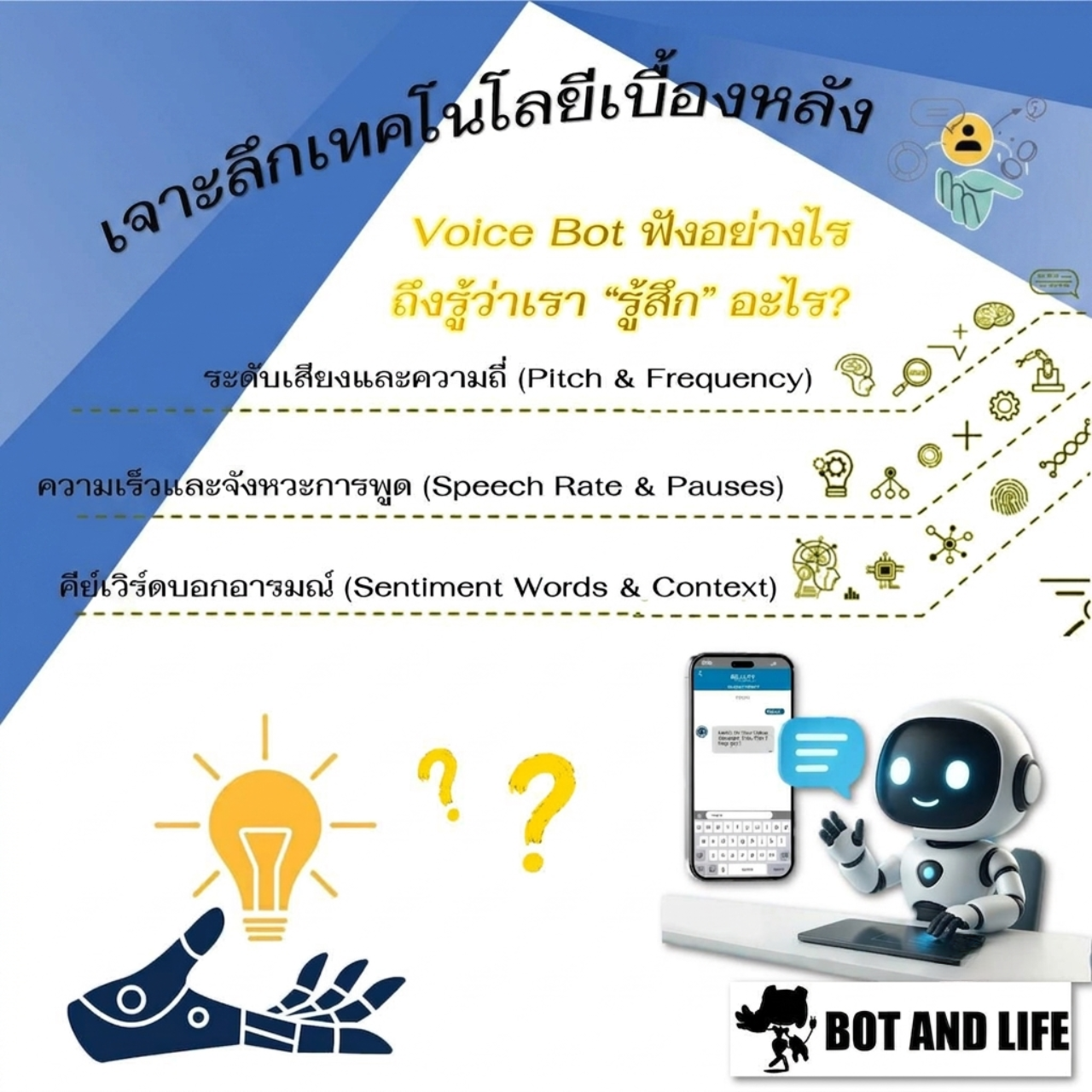
After exploring the possibilities of emotion-aware Voice Bots, many people may still wonder: How can AI understand whether someone is angry, frustrated, happy, or anxious simply by listening to their voice?
At Bot & Life, we leverage a technology called Speech Emotion Recognition (SER) to enhance the capabilities of Voice AI systems. This technology combines multiple layers of analysis to identify emotional signals hidden within everyday conversations.
Let's take a closer look at the three key components that make this possible.
1. Pitch and Frequency Analysis
Pitch and frequency can be considered an emotional fingerprint that is difficult to fake. When people experience different emotions, their bodies naturally react, causing measurable changes in vocal characteristics.
High Pitch
A sudden increase in vocal pitch compared to a speaker's normal baseline often indicates excitement, enthusiasm, fear, anxiety, or anger.
Low and Flat Pitch
A lower and more monotone voice may suggest sadness, fatigue, boredom, or emotional disengagement.
Pitch Variability
Voice tremors and unstable pitch patterns can signal stress, nervousness, uncertainty, or emotional distress.
2. Speech Rate and Pauses
The rhythm and timing of speech provide valuable clues about a person's emotional state.
AI systems analyze words-per-minute, speaking tempo, and periods of silence to gain deeper insight into user intent and emotional conditions.
Fast and Rapid Speech
Speaking quickly with little pause may indicate urgency, frustration, excitement, or a strong desire to express concerns immediately.
Slow Speech and Long Pauses
Slower-than-normal speech patterns can suggest hesitation, uncertainty, sadness, or emotional fatigue.
Sighs and Interruptions
Heavy sighs, abrupt interruptions, or repeated attempts to cut off the conversation often indicate discomfort, impatience, or declining satisfaction.
3. Sentiment Words and Contextual Understanding
After converting speech into text using Speech-to-Text technology, the system applies Natural Language Processing (NLP) to analyze both vocabulary and conversational context.
Negative Sentiment Indicators
Words such as "terrible," "cancel," "slow," "frustrating," or "unacceptable" contribute negatively to customer sentiment scores.
Positive Sentiment Indicators
Expressions like "thank you," "excellent," "impressive," and "very helpful" help identify positive customer experiences and satisfaction.
Sarcasm Detection
Modern AI systems do not rely solely on word choice. If a customer says, "Great service," while using an irritated tone and aggressive speech patterns, the system can recognize the mismatch and classify the interaction as negative rather than positive.
Real-Time Multi-Modal Analysis
These three components do not operate independently.
Instead, AI combines vocal characteristics, speech behavior, and linguistic context simultaneously through a process known as Multi-Modal Analysis. Within fractions of a second, the system generates an emotional profile that helps Voice Bots respond more naturally and appropriately.
This enables Voice Bots to move beyond scripted conversations and deliver interactions that demonstrate genuine understanding, empathy, and responsiveness.
Original by Tui's Codex
Bot and Life – Bring Your Bot to Life
Every business deserves AI solutions that are easy to use, affordable, and capable of delivering real results.
Ready to get started?
Visit us at: https://botandlife.com/
Create your own bot today: https://lnkd.in/gQC_vnM4