What is an AI Agent?
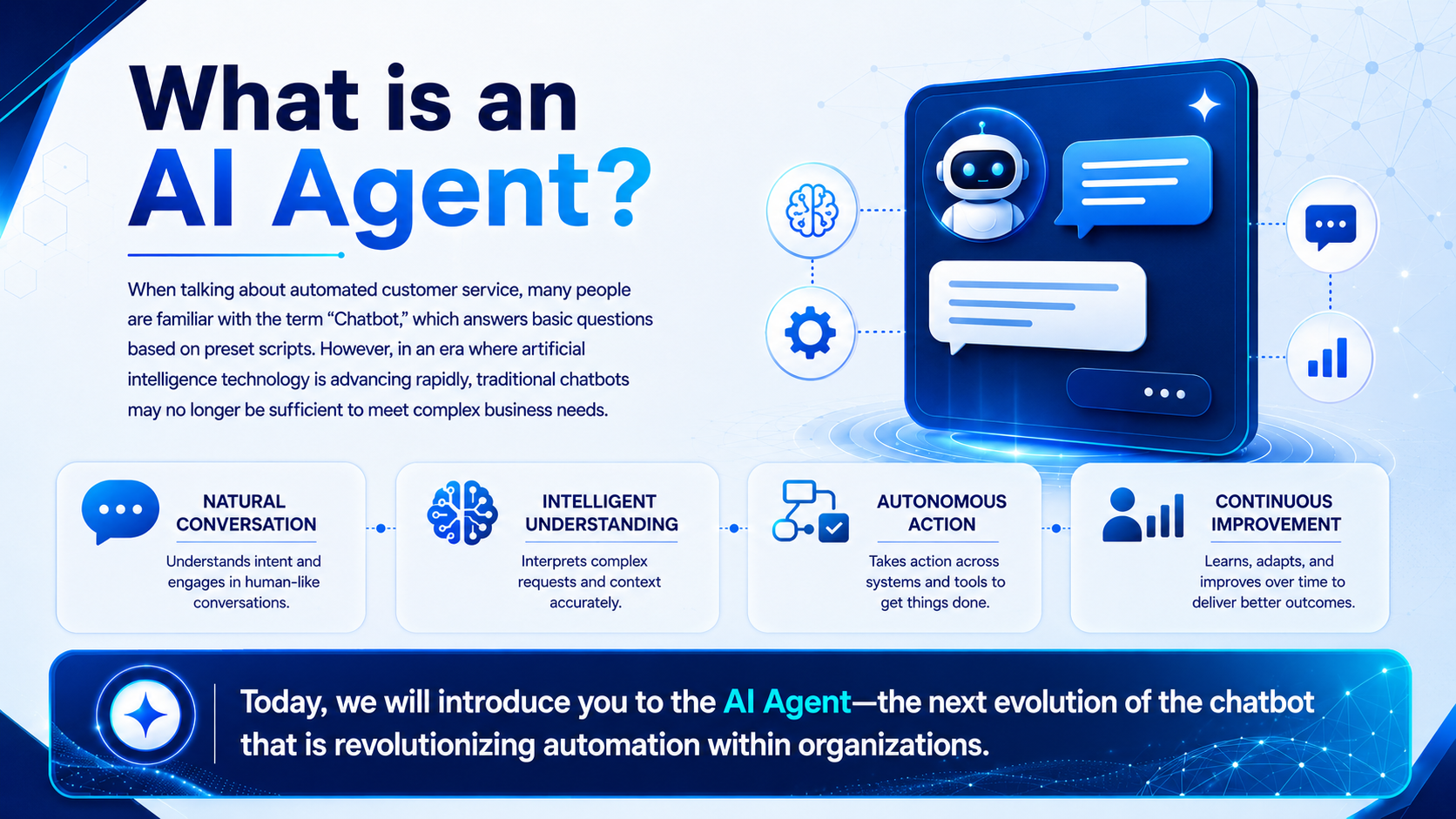
When talking about automated customer service, many people are familiar with the term "Chatbot," which answers basic questions based on preset scripts. However, in an era where artificial intelligence technology is advancing rapidly, traditional chatbots may no longer be sufficient to meet complex business needs.
Today, we will introduce you to the AI Agent—the next evolution of the chatbot that is revolutionizing automation within organizations.
Traditional Chatbots vs. AI Agents: What's the Difference?
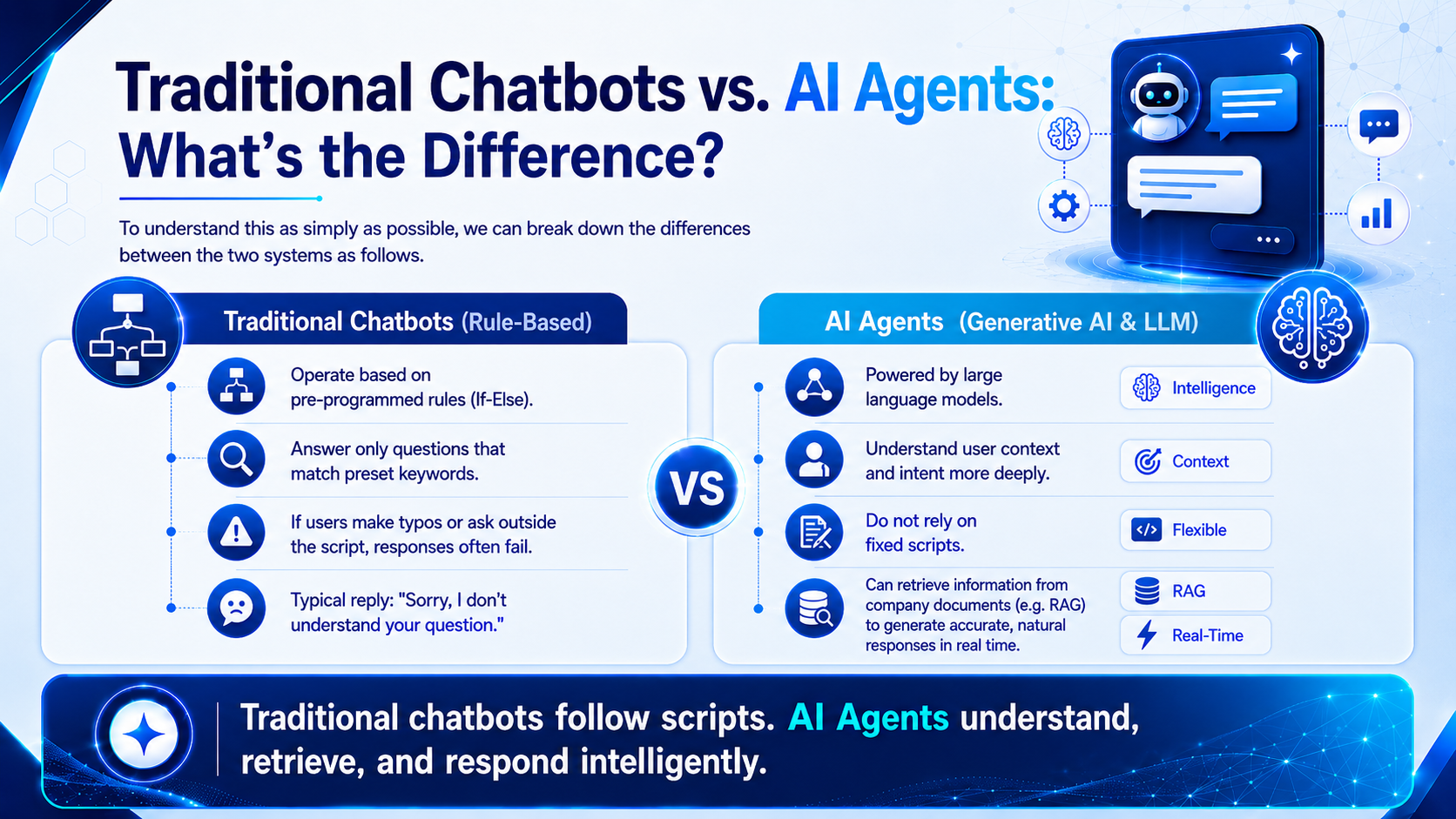
To understand this as simply as possible, we can break down the differences between the two systems as follows
- Traditional Chatbots (Rule-Based): Operate based on pre-programmed rules (If-Else). They can only answer questions that contain keywords matching those in the system. If a customer makes a typo or asks something outside the script, the bot usually replies, "Sorry, I don't understand your question."
- AI Agents (Generative AI & LLM): Powered by large language models, they can deeply understand the "context" and "intent" of the user. They do not rely on fixed scripts. They can retrieve information from organizational documents (via technologies like RAG) to process and generate accurate, natural-sounding answers in real-time.
The Capabilities That Make AI Agents Stand Out
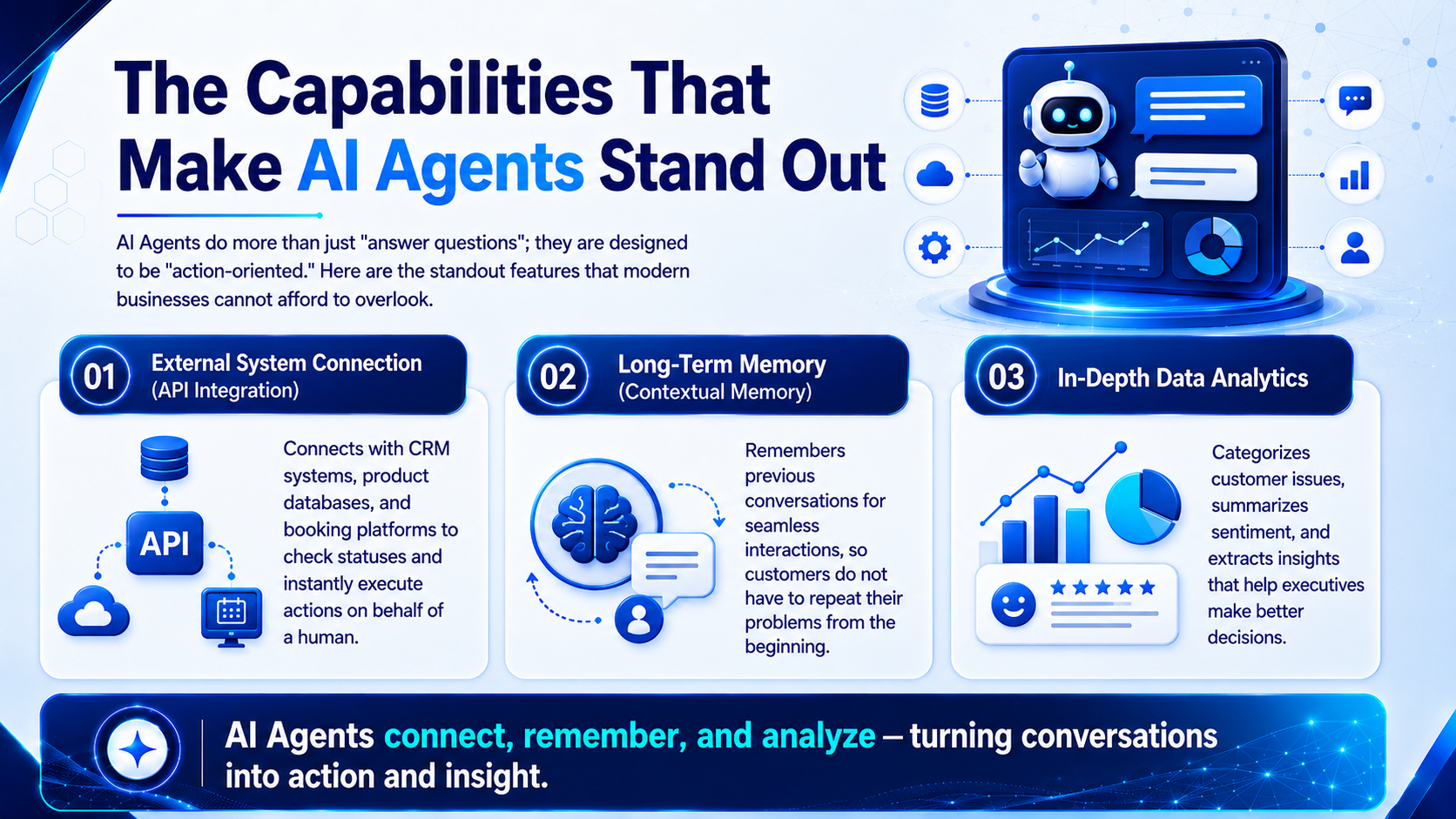
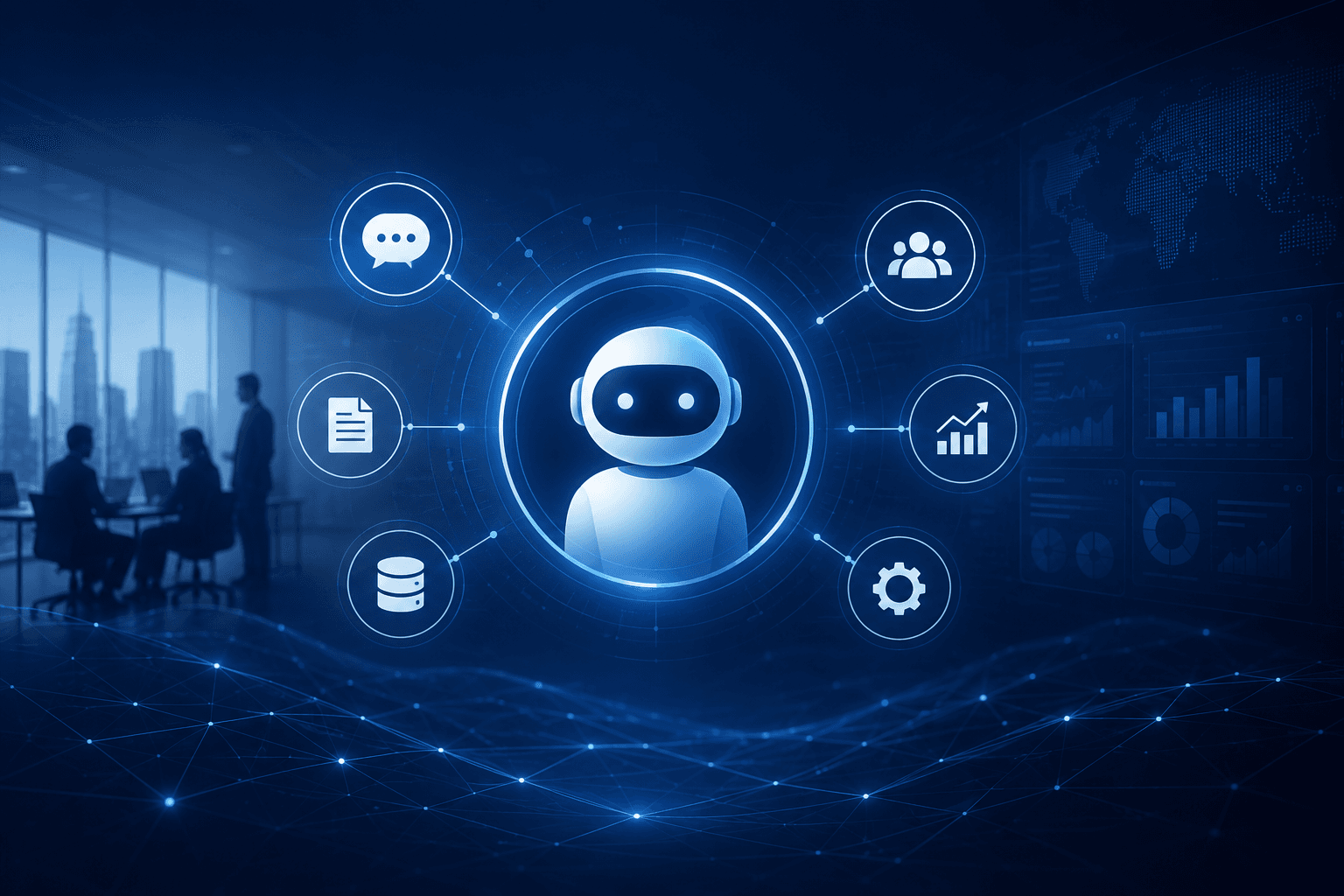
AI Agents do more than just "answer questions"; they are designed to be "action-oriented." Here are the standout features that modern businesses cannot afford to overlook
- External System Connection (API Integration): AI Agents can pull data from CRM systems, product databases, or booking systems to check statuses and instantly execute actions on behalf of a human.
- Long-Term Memory (Contextual Memory): They can remember previous conversations, ensuring seamless interactions. Customers don't have to repeat their problems from the beginning.
- In-Depth Data Analytics: AI Agents can categorize customer issues, summarize the mood of the conversation (Sentiment Analysis), and extract insights for executives to use in decision-making.
Why Your Business Should Switch to AI Agents
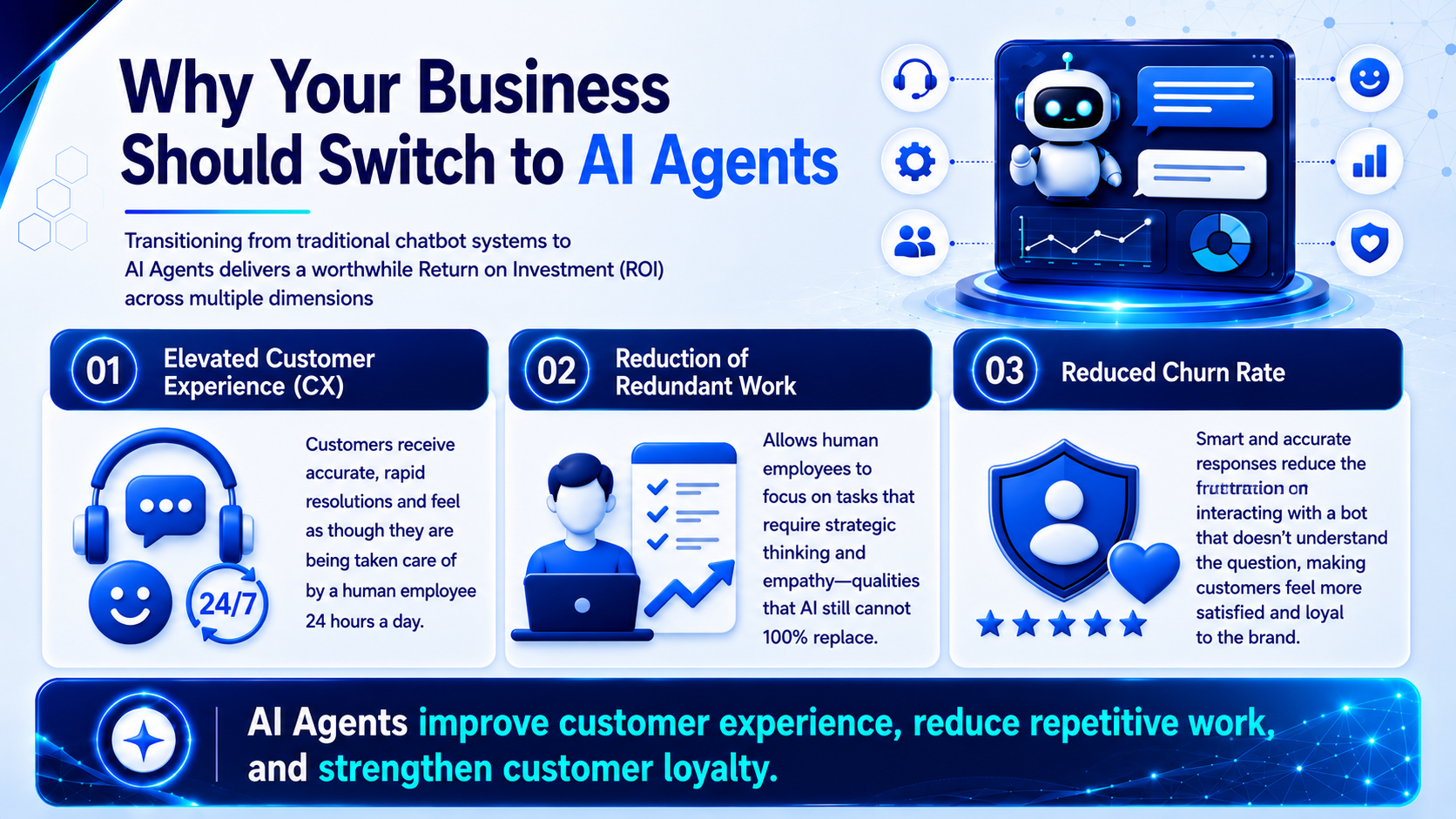
Transitioning from traditional chatbot systems to AI Agents delivers a worthwhile Return on Investment (ROI) across multiple dimensions
- Elevated Customer Experience (CX): Customers receive accurate, rapid resolutions and feel as though they are being taken care of by a human employee 24 hours a day.
- Reduction of Redundant Work: Allows human employees to focus on tasks that require strategic thinking and empathy—qualities that AI still cannot 100% replace.
- Reduced Churn Rate: Smart and accurate responses reduce the frustration of interacting with a bot that doesn't understand the question, making customers feel more satisfied and loyal to the brand.
Step into the Future of Customer Service with Technology from Echonic
No matter your industry, having a smart assistant system that can think, analyze, and act on your behalf is the key to creating a competitive advantage in today's market.
If you are looking for an AI Agent solution that can be perfectly customized to integrate with your database and business model, Echonic is ready to meet your needs today!